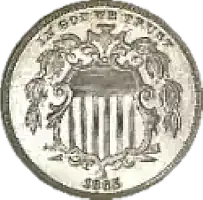
Five Cent Shield Nickel
Origins and Historical Role
The Shield Nickel occupies a pivotal place in U.S. numismatics as the nation’s first copper‑nickel five‑cent piece, introduced in 1866 during the turbulent Reconstruction era. Its creation marked a decisive shift away from the silver half dime, which had vanished from circulation due to widespread hoarding during and after the Civil War. By authorizing a durable copper‑nickel alloy, Congress provided a practical solution to the country’s small‑change shortage and set the foundation for the modern five‑cent denomination.
Design and Production Challenges
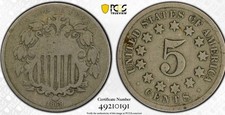
Chief Engraver James B. Longacre crafted the Shield Nickel’s bold design, featuring a Union shield flanked by laurel and topped with a cross—imagery meant to convey national strength and unity in the postwar years. The reverse initially included stars and rays surrounding a large numeral “5,” but the rays caused severe die‑wear issues, prompting their removal in 1867. Throughout its 1866–1883 run, the series struggled with hard planchets, weak strikes, and frequent die failures, resulting in a wide range of strike qualities and numerous collectible varieties.
Collector Appeal and Lasting Legacy
Despite its technical challenges, the Shield Nickel remains a cornerstone of 19th‑century U.S. coinage and a favorite among advanced collectors. Key dates—such as the proof‑only issues of 1879, 1880, and 1881—command significant premiums, while well‑struck examples are prized for their scarcity. The series paved the way for the Liberty Head and Buffalo Nickels, and its design reflects the nation’s resilience and evolving identity during Reconstruction. For collectors, the Shield Nickel offers both historical depth and a rewarding variety of challenges within a compact, influential series.
United States Nickels
Buffalo, Jefferson & Liberty Head Nickels



A Guide Book of Buffalo and Jefferson Nickels,. Market Values & Mintages – Includes updated retail pricing, mintage data, specifications, and coverage of Full Steps Jefferson nickels.
 '
'