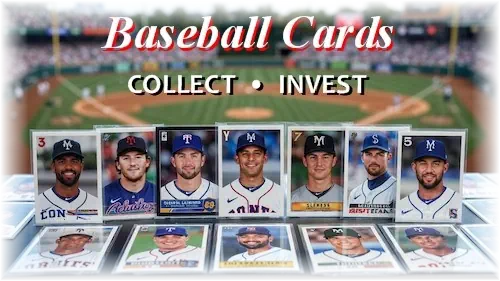
Collecting Baseball Cards
Baseball cards are one of America's oldest and most enduring collectibles — spanning from 19th-century tobacco inserts to today's PSA 10 rookie chase cards selling for millions. Whether you're a nostalgic fan or a serious investor, this guide covers everything you need to collect and invest with confidence.
A Brief History of Baseball Cards
Baseball cards have been cherished collectibles for well over a century, with enthusiasts spanning multiple generations worldwide. What began as promotional inserts tucked into cigarette packs, beer products, and even dog food packages evolved into one of the most active alternative investment markets in the world. These miniature treasures served a broader promotional purpose — businesses quickly discovered their marketing potential, and by the early 20th century baseball cards had become deeply embedded in American culture.
The introduction of cards inserted into newspapers marked a major turning point, encouraging fans to collect not just for love of the game but as an active hobby. As popularity grew, teams and individual players began producing their own promotional cards — featuring unique designs, uncommon photographs, and personal messages that added depth and variety to the hobby. Over time these cards evolved from promotional items into cherished keepsakes passed down through generations.
What Makes a Baseball Card Valuable?
Card values are driven by a combination of player performance, card scarcity, condition, and market timing. Understanding these factors separates savvy collectors from speculative buyers.
| Factor | What to Look For | Impact on Value |
|---|---|---|
| Rookie Card (RC) | First officially licensed rookie card — look for RC logo on modern cards | Extreme |
| PSA/BGS Grade | PSA 10 or BGS 9.5 Black Label commands the highest premium | Extreme |
| Player Performance | MVP seasons, Hall of Fame induction, record-breaking milestones | Very High |
| Print Run / Parallel | 1/1 superfractors, numbered /10, /25, /50 parallels command premiums | Very High |
| Autograph | On-card auto preferred over sticker auto; graded autos most valuable | High |
| Relic / Patch | Game-used jersey or bat patch embedded in card; logo patches highest | Moderate–High |
| Card Brand / Year | Topps Chrome, Bowman Chrome, SP Authentic hold value best | Moderate |
| Centering | Well-centered cards grade higher; off-center cards lose significant value | Moderate |
Browse thousands of graded and raw baseball cards — from vintage Hall of Famers to modern rookie investments.
⚾ Shop Baseball Cards on eBay 📚 Card Price Guides on AmazonExplore Baseball Cards by Category
Select a category below to browse key cards by era and type. Click any card to see its market status, price range, and live eBay listings.




The Most Valuable Baseball Cards Ever Sold
A handful of baseball cards have achieved legendary auction results — establishing the hobby as a legitimate alternative asset class alongside fine art and rare coins.
1952 Topps Mickey Mantle #311 — $12.6 Million
The most iconic baseball card ever printed. A PSA 9 copy sold for $12.6 million in 2022, making it the most expensive sports card in history at the time. Even heavily worn low-grade examples command thousands of dollars — the Mantle is a true icon of American culture.
🛍️ View on eBay1909–11 T206 Honus Wagner — Up to $7.25 Million
The most famous pre-war card in existence. Wagner allegedly demanded the American Tobacco Company stop production of his card — creating extreme scarcity. Fewer than 60 authenticated copies exist. A PSA 3 sold for $7.25 million in 2022, cementing its status as the pre-war equivalent of Action Comics #1.
🛍️ View on eBay2009 Bowman Chrome Mike Trout Auto — $3.93 Million
A PSA 10 superfractor 1/1 autograph sold for $3.93 million — the most expensive modern card ever sold. Mike Trout is considered the best player of his generation, and his autographed rookie cards represent the modern equivalent of the Mantle for today's collectors.
🛍️ View on eBay1933 Goudey Babe Ruth — Up to $500,000+
The most popular pre-war set features Ruth in four different card numbers (#53, #144, #149, #181). High-grade examples of any Ruth Goudey are extraordinarily scarce — the cards were made to be handled by children and few survived in top condition. Any grade commands serious collector interest.
🛍️ View on eBayThe Baseball Card Eras Explained
Pre-War Era (1869–1941)
The earliest baseball cards appeared as tobacco inserts in the 1860s and 1880s, with the iconic T206 set (1909–1911) representing the pinnacle of pre-war collecting. These cards were printed on thin cardstock, inserted into cigarette packs, and handled extensively — making high-grade survivors exceptionally rare. The 1933 Goudey set introduced the modern format that collectors recognize today, featuring full-color artwork and biographical information on the back.
Vintage Era (1948–1979)
Bowman and Topps defined this era, with Topps achieving a near-monopoly on the hobby by the mid-1950s. The 1952 Topps set — featuring Mickey Mantle's most iconic card — established the template for modern baseball card design. This era includes the rookie cards of virtually every Hall of Famer from the golden age of baseball: Willie Mays, Hank Aaron, Roberto Clemente, Nolan Ryan, and dozens more. Condition is critically important for vintage cards — the difference between PSA 5 and PSA 8 can be tens of thousands of dollars.
Junk Wax Era (1986–1994)
The junk wax era was defined by massive overproduction — companies printed hundreds of millions of cards in response to collector demand, creating a glut that collapsed values for most cards from this period. However, genuine stars from this era (Ken Griffey Jr., Derek Jeter, Frank Thomas) still command strong prices in high grade, and the 1989 Upper Deck set revolutionized card quality. Most junk wax commons are worth pennies, but key rookies in PSA 10 remain solid investments.
Modern Era (1995–Present)
The modern era introduced autographs, game-used relics, serial-numbered parallels, and 1/1 superfractors. Bowman Chrome became the dominant platform for prospect collectors, and PSA grading transformed the market into a more investment-oriented hobby. Today, the market is driven by player performance — a breakout season or MVP award can 5–10x the value of a player's rookie cards overnight. The key to modern collecting is focusing on cards with low print runs, on-card autographs, and players with genuine long-term star potential.
Investing in Baseball Cards
Team and Player Promotional Cards
As the popularity of baseball cards grew, teams and individual players began producing their own promotional cards. These custom issues often featured unique designs, uncommon photographs, and occasional personal messages — adding depth and variety to the hobby. They became highly desirable pieces for collectors and represent an important chapter in baseball card history that parallels the mainstream hobby with its own distinct collecting culture.
Building an Investment-Grade Collection
The most successful baseball card investors focus on rookie cards of elite players in the highest possible grade. A PSA 10 Mike Trout 2011 Topps Update rookie is worth dramatically more than a PSA 7 of the same card — and the gap widens as demand increases. Key principles: buy the player, not the card; focus on the top 1–2 cards in a player's rookie year rather than chasing every parallel; and hold through performance fluctuations rather than panic-selling after a slow season.
From the 1952 Topps Mantle to today's hottest rookies — find your next investment-grade card on eBay.
⚾ Shop Graded Cards on eBay 📚 Card Investing Books on AmazonFrequently Asked Questions
What is the most valuable baseball card ever sold?
The 1952 Topps Mickey Mantle #311 in PSA 9 sold for $12.6 million in 2022, making it the most expensive baseball card ever sold at that time. The 1909–11 T206 Honus Wagner has also achieved $7.25 million at auction. In the modern era, a 2009 Bowman Chrome Mike Trout superfractor autograph 1/1 sold for $3.93 million — the most valuable modern card ever sold.
Is it worth getting baseball cards graded?
For cards worth over $50–75, PSA or BGS grading is generally worthwhile. PSA 10 copies of key rookie cards routinely sell for 3–10x more than ungraded raw copies. The grading fee (typically $20–$100+ depending on tier) is quickly offset by the premium a certified grade commands. For vintage cards worth over $200, grading is almost always recommended — authentication protects against counterfeits and trimmed cards, which are widespread in the vintage market.
What is the difference between Topps, Bowman, and Bowman Chrome?
Topps produces the flagship MLB-licensed set and has been the dominant brand since the 1950s. Bowman focuses specifically on prospects and rookie cards — it's the primary platform for identifying future stars before they reach the majors. Bowman Chrome uses chromium stock with a refractor finish that photographs beautifully, holds grades better, and commands significantly higher prices than regular Bowman base cards. For modern collecting, Bowman Chrome is the most important product — the 1st Bowman Chrome cards of top prospects are the cards most likely to appreciate significantly.
What are the "junk wax" years and why do those cards have low value?
The junk wax era (roughly 1986–1994) saw card companies massively overproduce to meet collector demand — printing hundreds of millions of cards that were bought in bulk and stored as investments. When the market realized supply far exceeded demand, values collapsed. Most junk wax commons are worth less than a penny today. However, genuine star cards in high grade from this era can still be valuable — Ken Griffey Jr.'s 1989 Upper Deck RC in PSA 10 sells for $10,000+, and Derek Jeter's 1993 SP in high grade commands $50,000+.
How do I know if a vintage card has been trimmed?
Trimming — cutting the edges of a card to improve apparent condition — is widespread in the vintage market. Signs include: edges that appear too sharp or perfectly straight under magnification, dimensions slightly smaller than standard for that set, and corners that look artificially crisp on an otherwise worn card. Always measure suspicious cards with calipers against known-good examples. This is one of the primary reasons PSA and BGS grading is valuable for vintage purchases — both services detect trimmed cards and label them as altered, which protects buyers from paying premium prices for doctored examples.
Where is the best place to buy and sell baseball cards?
eBay remains the largest marketplace with the most active buyers and sellers — always check completed sold listings to establish current market value before buying or selling. PWCC Marketplace specializes in high-value graded cards and reaches serious collectors. Goldin Auctions and Heritage Auctions are the premium auction houses for vintage keys and high-grade modern cards. Local card shows and shops are excellent for raw vintage cards, bulk lots, and face-to-face negotiations. For modern hobby boxes and sealed product, local card shops and established online hobby retailers offer the most transparent pricing.
Whether you're chasing a 1952 Mantle or building a modern rookie portfolio, the world's largest baseball card marketplace is one click away.
⚾ Shop All Baseball Cards on eBay 📚 Baseball Card Books on Amazon '
'