Coins of Asia
China • Japan • India • Islamic • Modern Asian Mints
Three Thousand Years of Asian Coinage
The World's Oldest Monetary Traditions — From Chinese Cash to Modern Bullion
Asia's coinage traditions are among the oldest and most varied on Earth, encompassing monetary systems that developed independently across China, India, Persia, and the Islamic world long before sustained contact with European coinage practices. China produced some of the earliest cast bronze coins in history — the distinctive round cash coins with square holes that would remain the standard currency across East Asia for over two thousand years. India pioneered punch-marked silver coins as early as the 6th century BCE, creating one of the ancient world's most sophisticated monetary systems at precisely the same historical moment that Greek city-states were developing their own silver coinage on the other side of the continent.
The Islamic caliphates transformed the ancient Persian and Byzantine monetary systems into a new gold standard — the gold dinar — that became the dominant trade currency across a territory stretching from Spain to Central Asia for centuries. Japan's feudal monetary system, anchored by the oval gold koban of the Edo period, produced some of the most visually distinctive and historically evocative coins in world numismatics. Together, these traditions represent a collecting universe of extraordinary depth — one where a single well-chosen piece can connect the collector to the Silk Road, the Mughal court, the samurai economy, or the first centuries of Islamic civilization. Asian coins are not a footnote to world numismatics; they are one of its central chapters.
China — The Birthplace of Paper Money and Cash Coinage
Two Millennia of Cast Bronze, Imperial Gold & Modern Pandas
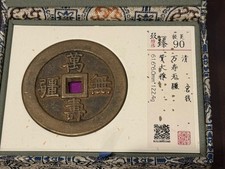
Chinese monetary history is one of the most continuous and self-contained in the world — a tradition spanning from the earliest spade and knife money of the Zhou dynasty through the cast round cash coins of the Qin unification in 221 BCE, and onward through every subsequent dynasty to the modern People's Republic. The round cash coin with its square central hole — a design whose symbolism reflected the ancient Chinese cosmological concept of a circular heaven above a square earth — proved so functional and so culturally resonant that it endured essentially unchanged for over two thousand years. Specific dynasty issues, reign titles, and mint marks allow specialists to attribute individual coins to specific emperors, mints, and decades of production, creating a collecting universe of virtually unlimited depth within a single basic coin form.
Imperial Chinese gold and silver coins — particularly the Sycee (shoe-shaped silver ingots) and later the dragon dollar coins of the Qing dynasty — add an entirely different dimension to Chinese numismatics. The Qing silver dragon dollars, struck from 1890 onward as China began adapting to Western monetary standards, are among the most actively collected 19th-century Asian coins in the world market, with rare provincial issues and key dates commanding extraordinary premiums. In the modern era, the Chinese Gold Panda — introduced in 1982 with annually changing designs and strict production limits — has become one of the world's most keenly collected modern bullion coins, with early-year issues from the 1980s now worth multiples of their original issue price.
India, Persia & the Islamic World
Punch-Marked Silver, Mughal Gold & the Gold Dinar
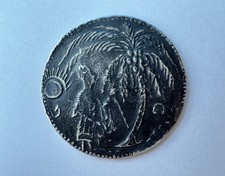
India's numismatic heritage begins with the punch-marked silver coins (Puranas) of the Mahajanapadas — the great kingdoms of the Gangetic plain — dating to approximately 600 BCE. These irregular, silver pieces bearing multiple punch marks representing the issuing kingdom's symbols represent one of antiquity's most important independent monetary inventions, developed simultaneously with but entirely separately from Greek city-state coinage. The subsequent coinage of the Maurya Empire under Chandragupta and Ashoka, the Indo-Greek kingdoms of Bactria, the Kushan Empire's magnificent gold dinars, and the medieval sultanate silver tankas create a nearly unbroken chain of Indian numismatic history spanning 2,500 years before the arrival of European colonial powers.
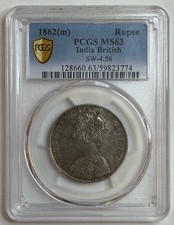
The Mughal Empire's gold mohurs — struck under Akbar, Jahangir, Shah Jahan, and Aurangzeb from the 16th through early 18th centuries — represent the artistic apex of Indian coinage. Jahangir's portrait mohurs in particular are considered among the most beautiful gold coins ever produced in Asia, featuring extraordinarily fine portraiture that rivals the best European medallic art of the same era. The Persian and later Islamic monetary tradition produced the gold dinar — a coin of consistent weight and purity that served as the hard currency anchor of the Islamic world's vast trade networks from the 7th century through the medieval period, circulating from the Atlantic coast of Morocco to the frontier of Tang dynasty China along the Silk Road.
Asian Coinage at a Glance
Major Traditions, Key Types & Collector Interest by Region
| Region / Era | Key Types | Date Range | Collector Interest |
|---|---|---|---|
| Ancient China | Spade money, knife money, cash coins | 1000 BCE – 1912 | Very High — dynasty depth |
| Ancient India | Punch-marked silver, Kushan dinars | 600 BCE – 700 AD | High — historical rarity |
| Mughal Empire | Gold mohurs, silver rupees | 1526 – 1857 | Very High — portrait artistry |
| Islamic / Persian | Gold dinars, silver dirhams | 600 – 1500 AD | High — trade route history |
| Feudal Japan | Gold koban, silver chogin | 1601 – 1868 | High — unique oval formats |
| Qing Dynasty China | Dragon dollars, cash coins | 1644 – 1912 | Very High — dragon dollar keys |
| Modern Asian Mints | Pandas, Philharmonics, Kangaroos | 1982 – present | Very High — annual bullion series |
Japan — The Oval Gold Koban and the Edo Monetary System
Samurai Economy, Feudal Currency & Japan's Most Iconic Coins
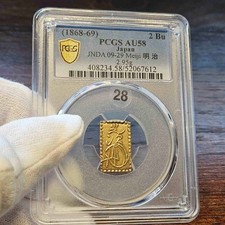
Japanese numismatics occupies a uniquely distinctive place in world coin collecting because Japanese monetary history developed in near-total isolation from the Western coinage tradition, producing forms and concepts with no parallel elsewhere in the world. The gold koban — an oval, hammered gold coin bearing the Paulownia flower and foliate design — served as the prestige currency of the Tokugawa shogunate's Edo period (1603–1868), a coin whose weight, design, and purity were strictly controlled by the Tokugawa government. The koban's oval form, completely unlike the round disc standard of every other major coinage tradition, reflects the independent development of Japanese monetary thinking from first principles rather than from borrowed convention.
The Meiji Restoration of 1868 brought Japan into contact with Western monetary standards, and the resulting transition coins — early Meiji gold yen pieces, trade dollars, and the modernized silver yen — represent a fascinating numismatic bridge between Japan's feudal monetary past and its emergence as a modern industrial power. The rarest early Meiji gold issues command exceptional prices in both Japanese and international markets. For collectors interested in the modern era, the Silver Proof sets produced by the Japan Mint for annual collector programs, along with commemorative issues tied to imperial events, Olympics, and other occasions, represent an actively collected modern Japanese numismatic series with broad international appeal.
Chinese Dragon Dollars
Qing dynasty silver — provincial issues from Guangdong, Beiyang, and the national mint, with rare varieties worth tens of thousands.
Japanese Gold Koban
The iconic oval gold coins of the Edo samurai era — struck in hammered gold and unlike any other coinage tradition in the world.
Mughal Gold Mohurs
Akbar, Jahangir, and Shah Jahan portrait mohurs — among the most beautiful gold coins ever struck in Asia, rivaling Renaissance European medallic art.
Islamic Gold Dinars
The hard currency of the Silk Road — gold dinars of the Umayyad, Abbasid, and Fatimid caliphates, struck in near-pure gold for centuries.
Chinese Gold Pandas
Annual design changes, strict mintage limits, and .999 fine gold — the Chinese Gold Panda is one of the world's premier modern bullion coin series.
Perth Mint Bullion
Australian Kangaroo, Kookaburra, and Koala series — .9999 fine silver and gold from one of the world's most respected sovereign mints.
Asian Coin Explorer
Browse by Region • Click Any Coin for Details & eBay Listings



Modern Asian Mint Bullion — Pandas, Kangaroos & Philharmonics
World-Class Sovereign Mint Issues for Collectors and Investors
The late 20th century saw the rise of a new category of Asian and Pacific Rim bullion coins that have become among the most widely collected modern issues in world numismatics. The Chinese Gold Panda, launched in 1982 by the People's Bank of China, was a pioneer in the annually-changing design concept — where the panda reverse image changes every year, making each year's coin a distinct collectible rather than a simple commodity. Early-year Pandas from the 1980s — especially those certified by PCGS or NGC in gem condition — now command significant premiums over spot gold, rewarding early collectors who recognized the series' potential. The Silver Panda series mirrors the gold program with 30-gram (.999 fine) silver coins bearing the same annual panda designs.
The Perth Mint of Western Australia produces some of the world's most technically accomplished and artistically elaborate modern bullion coins — the Australian Kangaroo (gold), Kookaburra (silver), Koala (silver), and Lunar series coins are all minted in .9999 fine metal with exceptional die quality and surface finish. The Lunar series in particular — now in its third 12-year cycle — has developed a dedicated following among collectors who assemble complete year sets of each animal in the Chinese zodiac rotation. Singapore, South Korea (the KOMSCO Chiwoo Cheonwang series), and India (Ashoka Pillar gold coins) round out an increasingly diverse landscape of modern Asian sovereign mint issues that compete effectively for collector attention with the established Western bullion programs.
Building an Asian Coin Collection
Choosing Your Region, Managing Authenticity & Finding Quality
Assembling an Asian coin collection requires clear focus before the first purchase, because the continent's numismatic variety is so vast that an unfocused approach produces a collection that is broad but shallow. The most rewarding Asian collections tend to center on a specific region, dynasty, or era — Chinese cash coins of a particular dynasty, Mughal gold across a specific reign, or Japanese Meiji-era gold — allowing the collector to develop genuine expertise and make increasingly confident attribution and condition judgments over time. This depth of knowledge is particularly important in Asian numismatics, where the forgery and reproduction market is more active than in almost any other area of world coin collecting.
Authentication is the central challenge of ancient and medieval Asian coin collecting. Chinese cash coins have been reproduced since antiquity — many "ancient" pieces offered online are modern reproductions. For significant purchases, NGC World Coins and PCGS certification provide third-party authentication and attribution that dramatically reduces this risk. For Mughal and Islamic gold, established dealers who are members of professional numismatic organizations and who provide detailed provenance documentation are essential. Modern Asian bullion coins — Pandas, Perth Mint issues, Korean KOMSCO coins — present far fewer authenticity concerns but benefit from PCGS or NGC certification for high-grade MS70 or PF70 examples where the premium above spot is largest and most dependent on confirmed grade.
Shop Asian Coins on eBay
Browse thousands of certified ancient Chinese, Japanese, Indian, Islamic, and modern Asian bullion coins — PCGS and NGC graded examples, key dates, dragon dollars, gold pandas, and Perth Mint issues from specialist dealers worldwide.
🛍️ Shop Asian Coins on eBay 📚 Asian Coin References on AmazonFindRareCoins.com participates in the eBay Partner Network and Amazon Associates program. Purchases made through links on this page may earn us a commission at no additional cost to you.
Frequently Asked Questions
What Asian coins are most valuable to collectors?
At the top of the market, rare Mughal gold mohurs — particularly Jahangir's portrait issues and square gold pieces with Persian calligraphy — have realized six figures at major international auction houses. Early Chinese Gold Pandas in PCGS MS70 from the 1982 inaugural year have exceeded $100,000 at auction. Among ancient Asian issues, rare Kushan Empire gold dinars in fine condition and Indo-Greek gold staters with exceptional portraiture command significant premiums. For Japanese coins, rare Meiji gold issues and early koban in documented fine condition are the most valuable. Among modern issues, rare-date Perth Mint Lunar series coins in PF70 and early KOMSCO issues in certified top grade carry the highest premiums over spot metal value.
Are Chinese cash coins worth collecting?
Chinese cash coins offer one of the most rewarding and accessible entry points in all of world numismatics. Common dynasty issues — Han, Tang, Song, Ming, and Qing cash — are available for just a few dollars each in circulated condition, making them ideal for beginning collectors who want genuine ancient and medieval coins at minimal cost. The depth of the series is extraordinary: with hundreds of distinct reign titles, mint marks, and reverse varieties across two thousand years of production, a lifetime of serious study barely scratches the surface. Rarer issues — particularly Song dynasty iron coins, Ming dynasty large cash, and specific Qing provincial mint pieces in uncirculated condition — can reach hundreds or thousands of dollars. PCGS and NGC both certify Chinese cash coins for serious collectors.
What is a Chinese Gold Panda and why are early years valuable?
The Chinese Gold Panda is an annual bullion coin series issued by the People's Bank of China beginning in 1982, struck in .999 fine gold with an annually changing panda reverse design. Unlike most bullion coins — which repeat the same design year after year — the Panda's annual design change makes each year a distinct collectible. Early-year Pandas (1982–1990) were produced in relatively small quantities, and many were handled, spent down to melt value, or poorly stored in the years before their numismatic significance was recognized. Survivors in gem uncirculated condition (PCGS or NGC MS69–MS70) are now genuinely scarce and command strong premiums over spot gold. The 1982 first-year Panda in certified top grade is one of the world's most valuable modern bullion coins.
What are the most collectible Japanese coins?
Japanese numismatics divides naturally into three collecting areas. Feudal-era coins — the gold koban and its fractional denominations (ichibu-kin, nishu-kin), silver chogin ingots, and the various Edo-period minted pieces — are the most historically dramatic and visually distinctive. Meiji-era transition coins (post-1868) include both the fascinating early hybrid issues produced as Japan adopted Western coinage standards and the fully modernized gold yen pieces that followed. Modern commemorative and proof sets from the Japan Mint — including Olympics issues, imperial household commemoratives, and annual proof sets — form the most actively collected modern Japanese series. The rarest Meiji gold in certified gem condition and the most important Edo-period koban command the highest prices in the Japanese numismatic market.
How do I authenticate ancient Indian and Islamic coins?
Authentication of ancient Indian and Islamic coins is one of the most important challenges in Asian numismatics. The market for reproductions — particularly of Mughal gold mohurs and Kushan gold dinars — is substantial, and sophisticated fakes exist that can deceive inexperienced buyers. The most reliable protection is purchasing from established dealers who are members of the Professional Numismatists Guild (PNG) or the International Association of Professional Numismatists (IAPN), both of which enforce authenticity standards and provide recourse for misrepresented coins. NGC World Coins and PCGS World Coins certify ancient Indian and Islamic issues, providing third-party authentication that dramatically reduces the risk for significant purchases. Physical characteristics to examine include die work quality, metal composition (XRF testing for gold purity), and wear patterns consistent with genuine age and circulation rather than artificial aging.
What is the Perth Mint Lunar series and why is it popular?
The Perth Mint's Lunar series celebrates the 12-year Chinese zodiac cycle, issuing annual coins bearing each animal sign in rotation — Rat, Ox, Tiger, Rabbit, Dragon, Snake, Horse, Goat, Monkey, Rooster, Dog, and Pig. Now in its third 12-year cycle (Lunar Series III began in 2020), the series has built a dedicated international collector following among both Asian communities for whom the zodiac holds cultural significance and Western numismatists drawn to the Perth Mint's exceptional production quality and annual design variety. The coins are struck in .9999 fine gold and silver in multiple sizes, with proof and bullion finish options. Completing a full 12-coin zodiac set in a single series — especially in PF70 Ultra Cameo for the proof versions — has become one of the most popular modern world coin collecting goals in the international market.
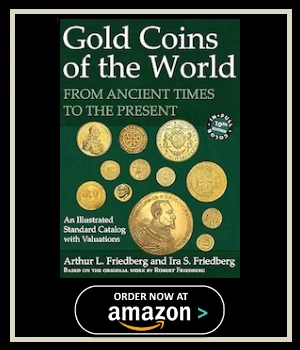
More than 22,000 coin types, which are illustrated with more than 8,500 photos, each one of them in color. 852 pages
 '
'